People often speak about trust as though it is permanent once established.
But trust is more fragile and dynamic than many realize.
Even strong relationships experience moments of uncertainty because humans are emotional beings, not perfectly rational machines.
Trust requires:
- communication
- patience
- emotional maturity
- honesty
- interpretation
- empathy
Most importantly, trust requires resisting the temptation to let fear become truth without evidence.
Why the Human Brain Loves Worst-Case Scenarios
The brain is naturally biased toward negative possibilities.
This is called negativity bias.
From an evolutionary perspective, early humans survived by anticipating danger quickly.
Assuming the rustling bush contained a predator rather than harmless wind increased survival chances.
Today, however, that same instinct often creates emotional suffering in relationships.
The mind automatically prepares for:
- betrayal
- rejection
- humiliation
- abandonment
Even when evidence is weak or nonexistent.
The brain mistakenly believes:
“If I prepare for pain, I’ll be safer.”
But excessive suspicion damages emotional peace.
The Emotional Cost of Suspicion
Constant suspicion creates enormous psychological strain.
People trapped in chronic relationship anxiety often experience:
- stress
- obsessive thinking
- emotional exhaustion
- sleep problems
- insecurity
- hypervigilance
Ironically, fear of betrayal can sometimes damage relationships more than actual problems themselves.
Why?
Because emotional mistrust changes behavior.
People become:
- distant
- defensive
- investigative
- emotionally reactive
This slowly erodes emotional safety between partners.
Why Rational Thinking Matters in Emotional Moments
Strong emotions narrow perspective.
That is why emotional regulation matters so much in relationships.
Pausing before reacting creates space for:
- context
- understanding
- evidence
- communication
- perspective
Without that pause, imagination often becomes louder than reality.
That evening could easily have turned into:
- accusations
- arguments
- mistrust
- emotional damage
Instead, one simple decision changed everything:
checking the facts before reacting emotionally.
The Humbling Reality of Human Misinterpretation
One of the most uncomfortable truths about human beings is how often people misread situations confidently.
Humans constantly interpret:
- expressions
- tone
- silence
- behavior
- objects
- body language
And those interpretations are heavily influenced by emotional state.
Fearful minds see danger.
Insecure minds see rejection.
Suspicious minds see secrecy.
This does not make people irrational.
It makes them human.
Why Everyday Objects Sometimes Become Emotional Symbols
Objects themselves are emotionally neutral.
But human beings assign emotional meaning constantly.
A forgotten receipt becomes suspicious.
A hidden phone notification feels threatening.
An unfamiliar object feels symbolic.
The object becomes emotionally charged not because of what it is, but because of what it represents psychologically.
This explains why small discoveries can trigger disproportionately large emotional reactions.
Emotional Intelligence and Relationship Health
Emotionally healthy relationships are not built on perfection.
They are built on emotional regulation.
That includes:
- pausing before reacting
- asking questions
- seeking clarity
- tolerating uncertainty temporarily
- resisting catastrophic thinking
Emotional intelligence does not eliminate fear.
It prevents fear from controlling behavior completely.
Why Patience Is More Powerful Than Panic
Modern culture rewards immediate reaction.
People are encouraged to:
- confront instantly
- expose quickly
- react emotionally
- assume motives
But emotionally mature relationships often require slowing down instead.
Patience allows reality to emerge naturally.
Panic creates distortion.
That evening, patience transformed what could have become emotional chaos into quiet perspective.
The Quiet Relief of Ordinary Explanations
There is something strangely comforting about discovering that frightening mysteries sometimes have completely boring explanations.
Not every strange detail hides betrayal.
Not every unanswered question signals deception.
Not every unfamiliar object represents danger.
Sometimes a mysterious object is simply:
a household repair tool.
And that realization can feel profoundly grounding.
The Deeper Lesson Hidden Inside an Ordinary Evening
Long after the embarrassment faded, the emotional lesson remained.
The evening revealed how vulnerable human beings are to incomplete information.
It showed how quickly:
- fear creates stories
- assumptions feel factual
- anxiety distorts perception
- imagination outruns logic
But it also revealed something hopeful.
A pause.
A moment of curiosity.
A willingness to seek truth calmly.
These small choices can prevent enormous emotional damage.
Why Relationships Need Curiosity More Than Control
Fear seeks control.
Love requires understanding.
Suspicion often tries to eliminate uncertainty completely.
But healthy relationships cannot survive under constant emotional investigation.
Instead, they require:
- openness
- conversation
- trust-building
- emotional patience
- willingness to ask rather than assume
Curiosity creates connection.
Assumption creates distance.
The Universal Human Fear Beneath the Story
At its core, this story resonates because it reflects a universal fear:
The fear of discovering something painful unexpectedly.
Everyone carries emotional vulnerability in relationships.
Even secure people occasionally experience moments of doubt.
That vulnerability is part of caring deeply.
The goal is not becoming emotionless.
The goal is learning not to let fear write entire stories without evidence.
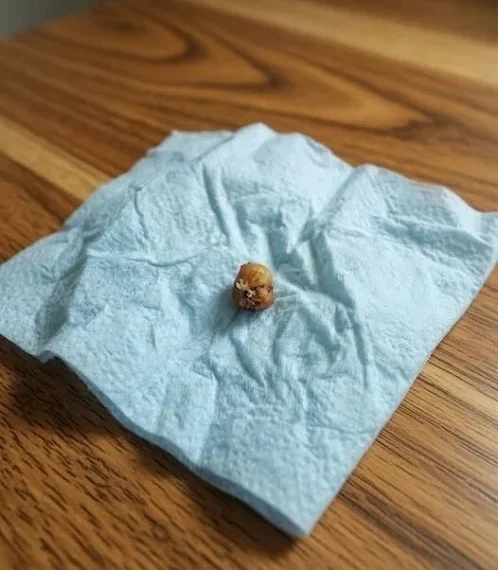
The Unexpected Wisdom Hidden in a Silicone Nozzle
It sounds almost ridiculous afterward.
An evening of emotional tension caused by a silicone sealant applicator.
Yet life often teaches its deepest lessons through ordinary moments.
A tiny household object became a reminder that:
- assumptions are dangerous
- fear distorts reality
- communication matters
- patience protects relationships
- clarity is healthier than imagination
Most importantly, it revealed how quickly the human mind can create emotional storms from incomplete information.
And perhaps that realization matters far beyond marriage itself.
Because in every area of life, people constantly encounter partial truths:
- misunderstood messages
- incomplete stories
- ambiguous situations
- emotional uncertainty
The challenge is resisting the urge to fill every unknown space with fear.
Sometimes the thing we dread most is nothing more than an ordinary object waiting patiently for a simple explanation.
And sometimes emotional maturity begins the moment we pause long enough to discover that truth.