When unusual appearance combines with:
- expiration
- odor
- slime
- discoloration
The safest option is disposal.
Why Appearance Alone Can Be Misleading
Humans often rely heavily on visual judgment.
But appearance alone is not always a reliable indicator of food safety.
Many harmless structures look alarming.
Meanwhile, some spoiled foods may appear relatively normal initially.
This is why food safety assessments should consider:
- smell
- texture
- color
- storage conditions
- expiration dates
Together rather than individually.
The Difference Between Normal Bacon Fat and a Strange Lump
Many consumers confuse ordinary fat with unusual tissue.
Normal Fat
Typically:
- white
- soft when raw
- evenly distributed
After cooking, it becomes:
- translucent
- crispy
- flavorful
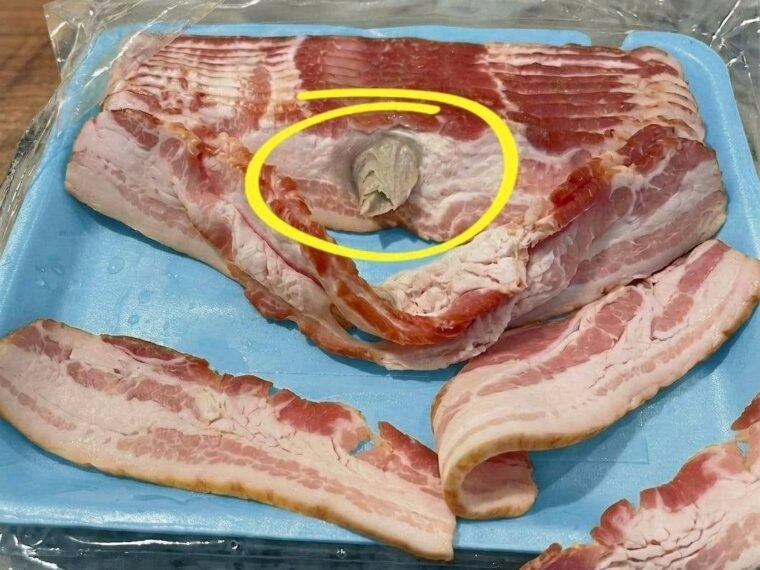
Unusual Lump
May be:
- round
- bean-shaped
- dense
- rubbery
- firm
These differences explain why consumers notice them immediately.
Why Bacon Quality Isn’t Necessarily the Problem
Many people assume strange tissue means poor quality.
This is not necessarily true.
In some cases, visible natural structures may indicate:
- less aggressive trimming
- minimal processing
- natural variation
Even premium meats occasionally contain anatomical structures.
No livestock animal is perfectly uniform internally.
The Evolution of Meat Processing
Historically, people purchased meat directly from local butchers.
Consumers expected variation because they were closer to food production.
Modern large-scale processing has changed expectations.
People now anticipate:
- consistency
- visual perfection
- identical slices
Yet biological products naturally resist perfect standardization.
This disconnect contributes to surprise when unusual structures appear.
How to Examine a Strange Lump Safely
If you discover a suspicious area:
Step 1: Stay Calm
Do not immediately assume contamination.
Step 2: Inspect Color
Look for:
- pale cream
- white
- light yellow
These colors often indicate benign structures.
Step 3: Smell the Product
Fresh bacon should not smell sour or rotten.
Step 4: Check Texture
Firm tissue is not automatically dangerous.
Slime is far more concerning.
Step 5: Trim if Desired
If the structure makes you uncomfortable, simply remove that section.
Why Food Waste Matters
Many perfectly edible products are discarded because consumers misinterpret harmless variations.
Food waste creates:
- financial loss
- environmental impact
- unnecessary resource consumption
Learning to recognize normal variations helps reduce waste significantly.
Common Questions People Ask
Is It a Tumor?
Occasionally unusual growths may occur in animals.
However, most visible lumps found in bacon are not dangerous tumors.
More commonly they are:
- fat deposits
- lymph nodes
- connective tissue
Can I Eat It?
Many natural tissue structures are technically edible when cooked.
However, many people remove them because the texture is unpleasant.
Should I Switch Brands?
Not necessarily.
All pork originates from animals with natural anatomical structures.
Some brands trim more aggressively than others, but no producer can completely eliminate natural variation.
Is This a Sign of Poor Hygiene?
Not usually.
Visible natural tissues do not automatically indicate contamination or poor sanitation.
The Bigger Lesson About Food
The strange lump in bacon teaches an interesting lesson about modern food culture.
Many people have become disconnected from how food actually originates.
When food appears too natural, it sometimes feels suspicious.
Yet nature is rarely perfectly symmetrical, smooth, or visually consistent.
Animals contain:
- fat
- glands
- connective tissue
- blood vessels
- lymphatic structures
Occasionally these become visible.
That visibility can be surprising, but surprise does not equal danger.
Why Education Reduces Anxiety
Knowledge changes perception.
The same lump that appears terrifying before understanding may appear completely ordinary afterward.
Instead of seeing:
“Something dangerous.”
You begin seeing:
“A normal biological structure.”
That shift dramatically reduces unnecessary worry.
Final Thoughts: The Weird Lump Is Usually Not the Disaster You Think It Is
Finding a strange lump in your bacon can instantly ruin breakfast—at least for a few minutes.
The unusual appearance triggers alarm, raises uncomfortable questions, and often sends people searching for answers. Yet in the vast majority of cases, the explanation is far less dramatic than the imagination initially suggests.
Most strange lumps found in bacon are simply natural parts of the animal, such as concentrated fat deposits, lymphatic tissue, connective tissue, or healed scar tissue. While these structures may look unusual, they are generally not signs of contamination, parasites, or dangerous disease.
The key is learning the difference between harmless anatomical variation and genuine spoilage. Warning signs such as foul odors, slimy textures, mold growth, or severe discoloration deserve attention. A pale, firm, odorless lump, however, is often nothing more than an unexpected reminder that bacon comes from a living animal—not a factory-produced synthetic product.
So the next time you open a package and discover something that looks strange, take a moment before throwing everything away.
Inspect it carefully.
Trust your senses.
Understand what you’re seeing.
Because sometimes the scariest-looking discoveries in the kitchen turn out to be completely ordinary—and the bacon you’ve been ready to toss may be perfectly fine after all. 🥓