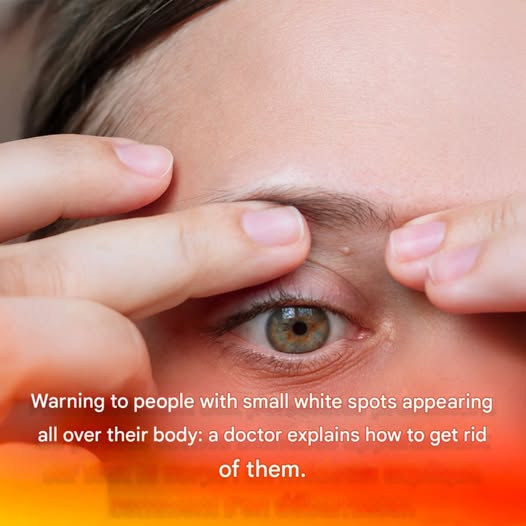
Skin changes can be deeply unsettling. A tiny white bump near the eyes, a cluster of pale dots across the cheeks, or mysterious white spots appearing on the arms or forehead often trigger immediate concern. Many people assume these spots are acne, allergic reactions, fungal infections, or signs of poor skincare. Others panic and begin aggressively scrubbing, squeezing, or piercing them in front of the mirror. Unfortunately, that reaction often creates a much bigger problem than the spots themselves.
One of the most common causes of these tiny white bumps is a condition called milia. Although usually harmless, milia can become stubborn, widespread, and emotionally frustrating—especially when they appear repeatedly or on visible areas of the face. Dermatologists and skincare specialists continuously warn against home extraction methods because improper removal can lead to scarring, infections, inflammation, and long-term skin damage.
What makes milia especially confusing is that they do not behave like normal pimples. Acne treatments often fail. Harsh scrubs may worsen irritation. Popping them rarely works. Many people spend large amounts of money on luxury skincare products without understanding what is actually happening beneath the surface of their skin.
Understanding milia requires understanding how the skin renews itself, how keratin behaves, and how certain daily habits silently affect the epidermis over time. From sun exposure and clogged pores to heavy eye creams and improper exfoliation, small lifestyle choices can strongly influence whether these white spots appear, persist, or disappear naturally.
This detailed guide explores everything about small white spots on the skin: what they are, why they happen, what mistakes people make, how dermatologists remove them safely, and how to build a skincare routine that protects the skin barrier while preventing future outbreaks.
What Are Milia?
Milia are tiny white or yellowish bumps that form just beneath the surface of the skin. They are small cysts filled with keratin, a protein naturally found in skin, hair, and nails. Unlike acne pimples, they are not filled with pus or liquid sebum. Instead, they develop when dead skin cells become trapped under the epidermis rather than shedding naturally.
These bumps are usually:
- firm to the touch
- painless
- white or pearl-colored
- very small
- difficult to squeeze
- located close to the skin surface
They commonly appear around:
- the eyes
- the cheeks
- the forehead
- the nose
- the chin
- the chest
- the upper arms
Some people develop only one or two milia occasionally, while others experience clusters that persist for months.
One reason milia confuse people is because they resemble whiteheads. However, whiteheads form from clogged pores and excess oil, while milia are keratin-filled cysts trapped under the skin. That distinction is extremely important because the treatment methods are completely different.
Why the Skin Develops Milia
The skin constantly renews itself. Millions of dead skin cells shed every day while fresh cells rise to the surface. Ideally, this process happens smoothly and invisibly. But sometimes dead cells become trapped beneath the epidermis instead of exfoliating normally.
When this occurs, keratin accumulates and hardens into tiny cysts.
Several factors can disrupt the skin’s natural renewal cycle.
Excess Dead Skin Cell Accumulation
One of the biggest causes is the buildup of dead skin cells. If the skin does not exfoliate efficiently, debris can remain trapped under the surface.
This may happen because of:
- aging skin
- dehydration
- lack of exfoliation
- excessive product layering
- skin barrier dysfunction
As skin renewal slows down, tiny keratin pockets can form more easily.
Sun Damage and Skin Thickening
Long-term sun exposure changes the structure of the skin dramatically. Ultraviolet radiation thickens certain layers of the epidermis and damages collagen over time. This can interfere with normal shedding processes.
People who spend years in strong sunlight without proper sunscreen protection often notice:
- rough texture
- uneven pigmentation
- tiny white bumps
- clogged pores
- increased skin sensitivity
Sun damage also weakens the skin barrier, making it harder for the skin to repair itself properly.
Heavy or Occlusive Skincare Products
Rich creams are not always beneficial. Many people unknowingly overload their skin with products that are too thick for delicate areas, especially near the eyes.
Heavy formulations can trap sweat, dead skin cells, and keratin beneath the surface.
Products commonly associated with milia formation include:
- thick eye creams
- petroleum-heavy ointments
- overly rich moisturizers
- greasy sunscreens
- heavy makeup primers
This does not mean moisturizers are bad. The issue lies in choosing formulas inappropriate for your skin type or applying excessive amounts repeatedly.
Skin Trauma and Irritation
Milia sometimes appear after the skin experiences trauma or inflammation.
This includes:
- burns
- laser treatments
- aggressive exfoliation
- chemical peels
- rashes
- allergic reactions
- excessive scrubbing
When the skin heals improperly, keratin can become trapped beneath newly formed tissue.
Hormonal and Age-Related Factors
Hormonal fluctuations can affect how the skin sheds cells and regulates oil production. Although milia are not directly caused by hormones in the same way acne is, hormonal shifts may create conditions that increase their appearance.
They are also extremely common in newborn babies because infant skin is still developing its exfoliation mechanisms.
Adults, especially those with mature skin, may notice milia more frequently because skin turnover naturally slows with age.
The Dangerous Mistake Most People Make
The biggest mistake people make is trying to pop milia.
This is understandable. The bumps appear close to the surface and resemble tiny pimples. Many assume squeezing them will solve the problem instantly.
But milia are different.
Unlike acne, they do not have an easy opening connected to a pore. The keratin is trapped beneath a layer of skin that cannot simply be pressed open safely.
When people attempt extraction using fingernails, tweezers, needles, or metal tools, several complications may occur.
Skin Barrier Damage
The epidermis acts as a protective shield against bacteria, pollution, and moisture loss. Piercing or digging into the skin disrupts this barrier.
Once damaged, the skin becomes vulnerable to:
- redness
- irritation
- inflammation
- infection
- sensitivity
Repeated trauma can weaken the skin long-term.
Permanent Scarring
The area around the eyes is especially delicate. Aggressive squeezing can rupture tiny blood vessels and create scars that last far longer than the original milia.
Ironically, many people trying to achieve flawless skin end up causing textural damage that is much more noticeable.
Hyperpigmentation
Inflammation often triggers post-inflammatory hyperpigmentation, particularly in medium to darker skin tones.
After picking at milia, dark marks may remain for weeks or even months.
This becomes especially frustrating because the person originally tried removing a tiny white spot and instead created larger visible discoloration.
Infections
Using unsterilized tools dramatically increases infection risk.
Bacteria can enter through broken skin, leading to:
- swelling
- pain
- pus formation
- redness
- worsening inflammation
In severe cases, improper extraction can require medical treatment.
Emotional Impact of Visible Skin Conditions
Even harmless skin issues can affect self-esteem significantly.
Many people feel distressed when milia appear before:
- weddings
- interviews
- parties
- vacations
- photoshoots
- professional events
Because social media heavily emphasizes smooth skin and unrealistic beauty standards, tiny imperfections often feel emotionally overwhelming.
Some individuals become obsessed with checking mirrors repeatedly, touching their skin constantly, or overusing products in desperation.
Ironically, stress itself can worsen skin health by increasing inflammation and impairing barrier repair.
This creates a frustrating cycle:
- skin changes appear
- anxiety increases
- harsh treatments begin
- irritation worsens
- more skin problems develop
Learning patience is therefore a major part of healthy skincare.
How Dermatologists Safely Remove Milia
Professional extraction is very different from home squeezing.
Dermatologists use sterile instruments designed specifically for skin procedures. They create an extremely small opening in the surface of the skin and gently remove the trapped keratin without causing unnecessary trauma.
The process is usually:
- quick
- minimally painful
- precise
- low-risk
- highly controlled
Because specialists understand skin anatomy, they can avoid damaging surrounding tissue.
Medical Treatments That May Help
For persistent or recurring milia, dermatologists sometimes recommend treatments that encourage faster skin renewal.
Retinoids
Topical retinoids help accelerate cell turnover.
These vitamin A derivatives encourage dead skin cells to shed more efficiently, reducing the likelihood of keratin entrapment.
Retinoids may improve:
- skin texture
- pore congestion
- fine lines
- uneven tone
- recurring milia
However, they must be used carefully because excessive use can irritate sensitive skin.
Chemical Exfoliants
Gentle exfoliating acids can help remove dead skin buildup gradually.
Common examples include:
- glycolic acid
- lactic acid
- salicylic acid
- mandelic acid
These ingredients dissolve surface debris more evenly than physical scrubs.
Overuse, however, may weaken the skin barrier.
Professional Procedures
In stubborn cases, dermatologists may use:
- laser resurfacing
- electrocautery
- microdermabrasion
- chemical peels
These treatments are typically reserved for persistent or extensive milia clusters.
The Difference Between Milia and Acne
Many people misdiagnose milia as acne. Understanding the distinction prevents treatment mistakes.
| Milia | Acne |
|---|---|
| Filled with keratin | Filled with oil and debris |
| Firm and hard | Often softer |
| No visible opening | Usually connected to pores |
| Difficult to extract | May pop naturally |
| Usually painless | Can become inflamed |
| Not caused by bacteria | Often involves bacteria and oil |
Acne products containing strong drying agents may not improve milia and can sometimes worsen irritation.
Gentle Skincare Habits That Help Prevent Milia
Healthy skin thrives on consistency rather than aggression.
People often believe stronger treatments equal better results, but over-treatment frequently damages the epidermis.
The goal is balance.
Use a Gentle Cleanser
Harsh cleansers strip natural oils and disrupt the skin barrier.
A good cleanser should:
- remove dirt effectively
- avoid excessive dryness
- maintain skin balance
- support barrier health
Over-cleansing can trigger irritation and sensitivity.
Exfoliate Carefully
Exfoliation helps prevent dead skin accumulation, but moderation matters.
Most dermatologists recommend:
- once or twice weekly exfoliation
- avoiding rough scrubs
- choosing gentle chemical exfoliants
- monitoring irritation carefully
Excessive exfoliation can inflame the skin and worsen texture.
Choose Lightweight Products Around the Eyes
The under-eye area is particularly vulnerable to milia.
Heavy creams often migrate into delicate skin folds overnight.
Lightweight formulations reduce the risk of buildup while still maintaining hydration.
Prioritize Sun Protection
Daily sunscreen is one of the most important anti-aging and skin-protective habits.
Ultraviolet damage contributes to:
- collagen breakdown
- skin thickening
- pigmentation
- texture changes
- impaired healing
Protecting the skin from sun exposure supports healthier cell turnover.
Maintain Healthy Hydration
Click page 2 to continue